 Vitaspan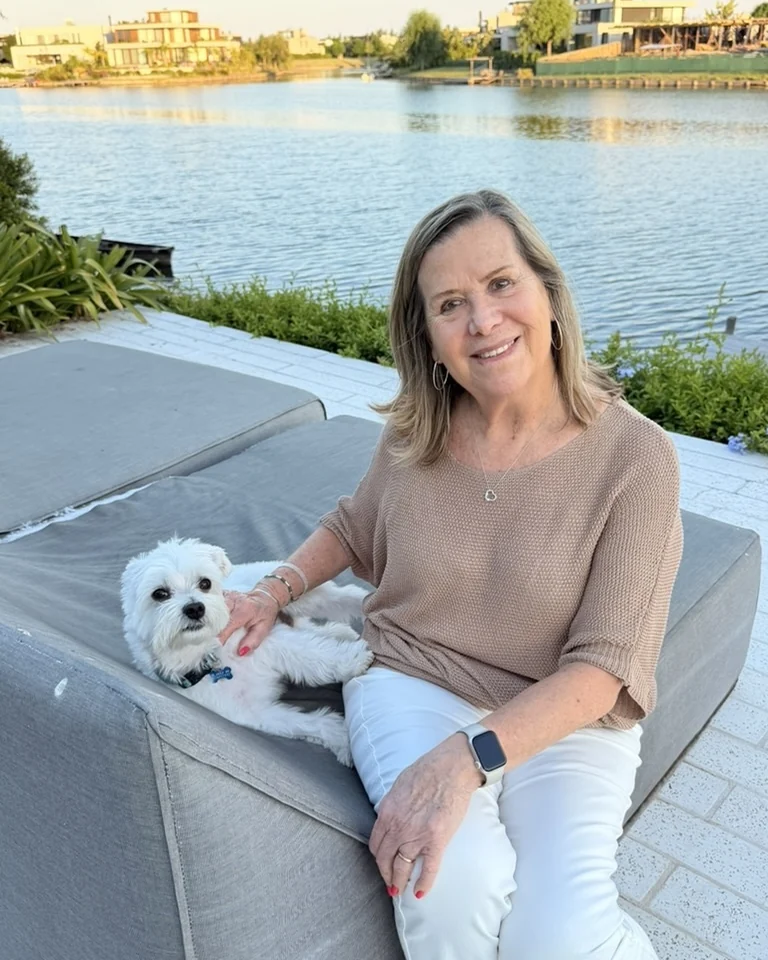
In July my mother, Lotti, flew from Córdoba, Argentina, to Portugal to spend a few months with my sister, Barbara, near Lisbon. She's 78, independent, and she had been looking forward to that trip all year.
By early August she was tired in a way that didn't go away, and her legs were swollen. On August 13, scans found blood clots in her lungs. She started a blood thinner, and we told ourselves the scary part was over.
Two weeks later Barbara called me. Mom was pale, out of breath, barely able to stand. At the emergency room her hemoglobin was 4.3. For a woman her age it should be around 12. That night she needed blood transfusions, and the doctors stopped the medicine that was protecting her lungs, because it was making her bleed.
Trying to understand from far away
I was an ocean away. What reached me came in pieces: a WhatsApp photo of a discharge note, a voice message from Barbara in a hospital corridor, a lab printout full of abbreviations. Everything was in Portuguese. A cardiologist, a gastroenterologist and an internist each held a different part of the picture, and each was right about their part.
I would sit up at two in the morning translating one paragraph at a time, trying to work out which numbers mattered and what I should be asking. Barbara carried the hardest part. She was at the bedside every day, talking to the doctors and looking after Mom, and then answering my questions at night. Within a few weeks she had put together a 73-page file of reports, scans and prescriptions. It was all there. Neither of us could make sense of it.
Some days we felt hope. On September 7 the doctors finally found where she was bleeding: fragile blood vessels in the lining of her stomach. They sealed them, she went home, and her hemoglobin climbed back to 12. For two weeks it felt like the story had a happy ending.
On September 28 she was bleeding again.
That was the worst day. The treatment for one problem was causing the other, and there didn't seem to be a good choice. If they kept the blood thinner, she would keep bleeding. Without it, the clots could come back. I remember thinking that I didn't even know enough to know what to be afraid of.
Putting it all in one place
That week I stopped trying to hold it all in my head. I put every document in one place, read and translated. I put every hemoglobin value on one chart, every medication with its dose and the doctor who prescribed it, every procedure on one timeline. Each doctor got a list of the questions that were still open with them.
Things started to show up that none of us had seen.
- A blood test from Córdoba in May, before she ever got on the plane, already showed her hemoglobin low, at 10.7. Her anemia had started before the trip and before any blood thinner. That changed the questions we asked.
- Her Apple Watch had been recording the whole time. Her resting heart rate had been climbing since early July, and her daily steps had been falling since February. Nobody had looked at those numbers next to her lab results.
- Two reports described her leg clots differently, and the discharge note listed a blood pressure pill that we had been told was stopped. These are the questions that fall between doctors, and nobody else is going to ask them for you.
Every morning Barbara got a short update: what changed, why it matters, and the questions for that day's doctor, written in Portuguese so she could show them, with the English next to them. Mom got her own copy in Spanish, written to her, so she knew what was happening in her own body without a translator.
From fear to a plan
On October 1 the team placed a small temporary filter in the main vein of her abdomen, to stop clots from reaching her lungs while she couldn't take a blood thinner. Every day after that, the chart showed the line going up: 7.2, 9.9, 10.1, 10.9, and 11.6 on October 7, the day she left the hospital.
Because her whole story fit in one organized file, a doctor in Argentina could review it in one sitting and give us a second opinion: a low-dose blood thinner before the long flight home, but only if the bleeding stayed stopped and the next endoscopy showed healing. The team in Lisbon agreed in principle and will make the final call after that endoscopy.
Mom isn't home yet. But for the first time since August, we know what comes next: blood tests at one and three weeks, the endoscopy on October 27, the decision about the blood thinner, the filter coming out, the flight home, and the doctors who will pick it up in Córdoba. We know who decides each step and what we'll ask. The fear hasn't gone away, but now it comes with a plan.
Why this became Vitaspan
Mom's doctors in Lisbon were excellent. What our family was missing was a way to keep up with them: to understand what they had found, to remember what was still open, and to show up to every conversation with the right question.
Everything Barbara and I pieced together by hand that month is what Vitaspan now does. It reads your medical documents, even in another language, charts your results over time, puts Apple Health next to your lab results, keeps the open questions for each doctor, and helps you keep your family up to date.
Vitaspan doesn't replace a doctor. I built it so that the next family going through something like this can be a better partner to theirs, even from an ocean away.